
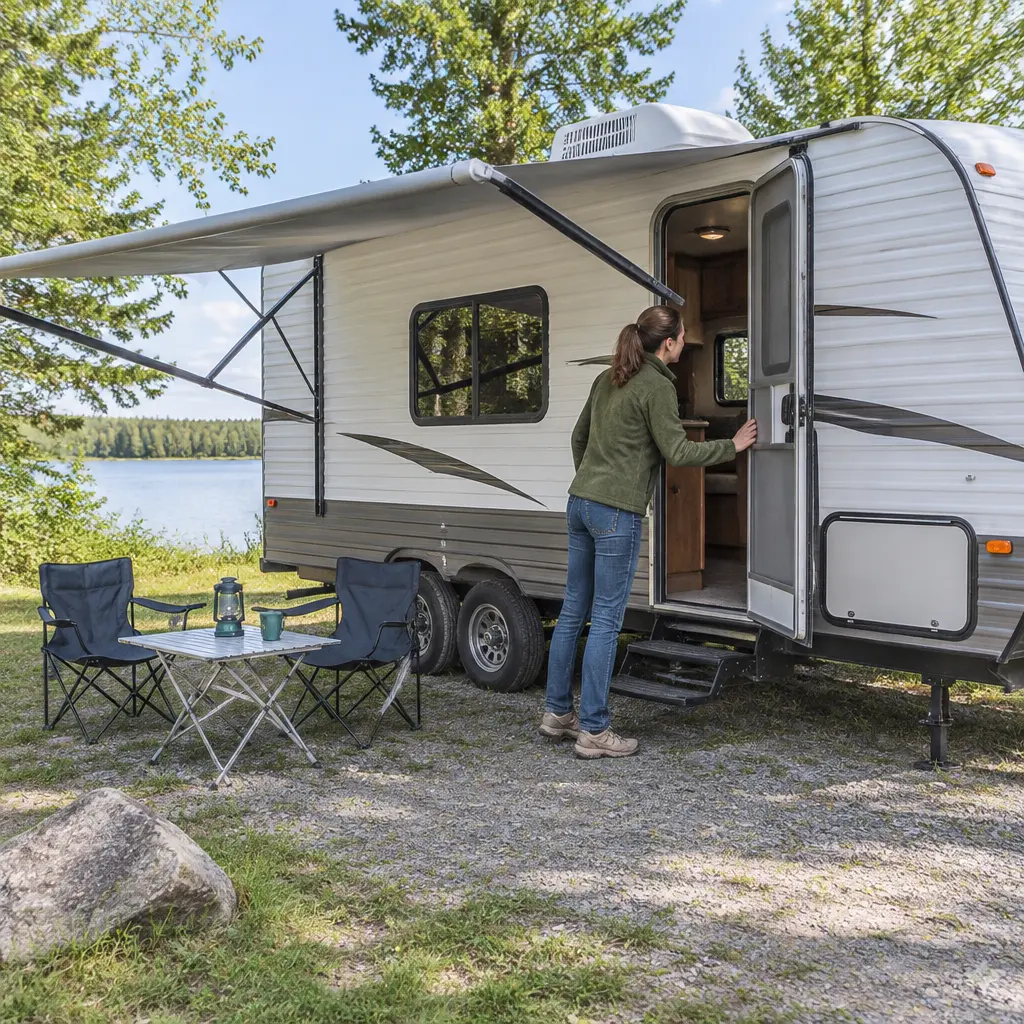
A recreational vehicle (RV) is a motorized or towable vehicle designed to provide living accommodations while traveling or staying in place. For stationary indoor living, the best RV is not necessarily the largest or newest: it is the one that fits the site, supports safe year-round use, and offers adequate insulation, utilities, ventilation, and accessible service. The choice matters because the U.S. Energy Information Administration reports that space heating is the largest energy use in U.S. homes, accounting for about 43% of residential site energy consumption in 2020. That figure is not RV-specific, but it underscores why heating efficiency and insulation deserve close attention. This guide compares RV types, explains essential comfort and utility features, and outlines site, safety, budget, and inspection checks before you buy.
Match RV type to stationary living needs
For stationary indoor living, an RV’s suitability depends on how its layout, construction, systems, and legal classification match the intended site and length of stay. The Recreational Vehicle Industry Association (RVIA) describes RVs as vehicles designed for recreational travel, temporary living quarters, or both. That broad category includes motorhomes and towable units, but a vehicle intended for occasional trips may not be equipped for continuous occupancy in every climate or jurisdiction.
Think of the options as related categories, or hyponyms, within the wider RV family: travel trailers, fifth wheels, motorhomes, and park-model recreational vehicles. Their differences affect usable floor area, mobility, setup requirements, and the cost of maintaining a home-like interior.
Travel trailers: a flexible, towable option
A travel trailer is a towable RV that connects to a vehicle using a conventional hitch. It can suit a person who wants to leave the RV on a long-term site but retain the option to move it. Floor plans range from compact units to larger models with separate bedrooms and living areas. Before choosing one, check the tow vehicle’s rated capacity, the trailer’s loaded weight, hitch limits, and site access—not just the manufacturer’s unloaded weight.
Fifth wheels: more interior space, more setup demands
A fifth wheel is a towable RV coupled to a pickup truck through a hitch mounted in the truck bed. Its raised front section can create a distinct bedroom or storage area, and many floor plans feel more residential than smaller trailers. The trade-offs include the need for a suitably rated truck, careful height and clearance checks, and a site that can accommodate the vehicle. For a stationary buyer, the towing combination may matter less day to day, but it remains important for delivery, relocation, and resale.
Motorhomes: integrated driving and living spaces
A motorhome combines the vehicle and living quarters in one unit. Class A models are generally the largest, Class C models typically have a cab-over sleeping or storage area, and Class B models are compact camper vans. A motorhome can be convenient if it may be driven regularly, but its engine and chassis add maintenance costs even when it is parked. Compare service access, parts availability, and the expense of maintaining both the home systems and the vehicle.
Park-model RVs: a residential feel with mobility limits
A park-model RV is a towable unit designed for temporary or seasonal use, often with a more home-like layout than a typical travel trailer. The RVIA’s park-model standard describes units up to 400 square feet when set up, excluding lofts, and designed for temporary accommodation rather than permanent residence. Local rules, site agreements, and utility connections determine whether a particular unit can be occupied and for how long. Verify those requirements before treating a park model as a year-round home.
Once the RV category fits the site and lifestyle, compare the features that determine whether its interior remains comfortable and manageable over time.
Evaluate insulation, climate control, and indoor air quality
Insulation, heating and cooling, moisture control, and ventilation work together to shape indoor comfort. An RV may have a furnace and air conditioner yet still struggle in extreme temperatures if its windows, floor, roof, or slide-out seals allow substantial heat loss or gain. Ask for documentation about the unit’s construction and equipment, but also inspect how those systems perform in the climate where it will be parked.
Insulation and four-season construction
Insulation slows heat transfer through walls, floors, roofs, windows, and doors. “Four-season” is a marketing description, not a universal guarantee of performance, so look for specific construction details: insulated underbellies, protected plumbing, quality window assemblies, sealed slide-outs, and materials suitable for local temperatures. Ask the manufacturer or seller for any available thermal ratings and clarify what those figures cover. A heated underbelly, for example, is useful only if the design protects the tanks and plumbing and the heating system is operated as intended.
Heating and cooling capacity
The right climate-control system depends on the RV’s size, insulation, window area, occupancy, and local weather. Test the furnace and air conditioner, confirm that air reaches each room, and check whether electrical service can support the appliances. In a stationary setup, ask an electrician or qualified RV technician whether the site’s supply, connections, and protective devices match the unit’s requirements. Do not assume a household extension cord or an undersized connection is safe for prolonged use.
Ventilation, condensation, and indoor air
Ventilation replaces stale indoor air and helps control moisture from cooking, showering, and breathing. The U.S. Environmental Protection Agency recommends controlling moisture and using exhaust ventilation in high-humidity areas to reduce conditions that encourage mold. Check for working kitchen and bathroom exhaust fans, operable windows, and signs of leaks or condensation around windows, cabinets, and mattresses. If the RV uses combustion appliances, confirm that carbon-monoxide alarms are installed and functioning, and follow the appliance manufacturer’s ventilation and maintenance instructions.
Comfort depends not only on the shell but also on whether water, electricity, and wastewater systems can support the intended occupancy.
Check utilities, storage, and daily-use layout
An RV’s utility systems determine how closely daily life resembles living in a conventional home. For a long-term setup, establish exactly how the unit will receive power and water, handle wastewater, and support internet or other essential services. A campground hookup, a private lot, and an off-grid site can require very different equipment and operating routines.
Electrical service and appliance loads
Electrical capacity is the amount of power available to the RV and the appliances operating inside it. Identify the unit’s service requirements and have the site connection assessed by a qualified professional. Make a list of high-demand appliances, such as air conditioning, space heating, cooking equipment, and water heating, then ask whether they can run together safely. Solar panels or a battery system may supplement power, but their practical contribution depends on system size, sunlight, storage capacity, and expected loads.
Water, wastewater, and plumbing access
A stationary RV needs a dependable source of potable water and a lawful way to manage graywater and blackwater. Confirm that the site provides appropriate connections, that hoses and fittings are suitable for their purpose, and that tanks and plumbing are accessible for inspection. In freezing climates, exposed pipes and tanks may need protection consistent with the unit’s design. Ask the seller to demonstrate faucets, drains, toilet operation, water heater function, and any leak-monitoring or shutoff features.
Floor plan, storage, and everyday ergonomics
A floor plan is the arrangement of sleeping, cooking, bathroom, storage, and work areas. For full-time or extended use, prioritize the features you will use daily: a comfortable bed, a shower that fits the occupants, a usable kitchen, adequate wardrobe and pantry storage, and a place to work or eat. Slide-outs can expand living space when deployed, but they add seals and mechanisms that need inspection and may require clearance on the site. If mobility or accessibility is a concern, check doorway widths, step height, bathroom access, and the ability to install suitable supports.
A well-equipped RV can still be an unsuitable home if the parking site, occupancy rules, or ownership costs do not work.
Verify site legality, safety, and total cost
Stationary RV living is shaped by more than the vehicle itself. Zoning rules, building and fire codes, park policies, lease terms, and utility requirements vary by location. The U.S. Census Bureau’s American Community Survey tracks RVs among housing units, but that classification does not mean every locality permits every RV to serve as a permanent residence. Contact the city or county planning office and, where applicable, the park or landowner before purchase.
Site suitability and legal occupancy
Site suitability means that the location can legally and physically accommodate the RV and its connections. Confirm permitted occupancy duration, minimum dwelling standards, setback and access rules, waste-disposal requirements, and whether the site has approved electrical and water service. Also measure access roads, gates, overhead branches, slopes, and the space needed for leveling and slide-outs. Get important approvals in writing rather than relying only on informal assurances.
Safety systems and inspection
A pre-purchase inspection can reveal water intrusion, roof damage, faulty appliances, tire or chassis problems, and electrical or propane-system defects. The National Fire Protection Association advises installing smoke alarms and carbon-monoxide alarms and maintaining them according to their instructions. Check alarm dates and operation, fire-extinguisher accessibility, propane connections, emergency exits, and the condition of wiring and hoses. For a used RV, consider an independent inspection by a qualified RV technician rather than relying solely on a seller’s demonstration.
Purchase price and ongoing expenses
Total cost of ownership includes the purchase price plus site rent, insurance, registration, utilities, repairs, routine maintenance, and replacement of aging components. Motorhomes add engine and drivetrain servicing; towables may require a capable tow vehicle and hitch equipment. Energy costs can be particularly sensitive to insulation and local weather, so compare utility estimates for the actual site rather than assuming an RV will cost less to heat or cool than a house. Keep a repair reserve for roof, appliance, tire, plumbing, and seal maintenance.
The following checklist turns these considerations into a practical comparison when viewing candidate units.
Use a purchase checklist to compare candidates
- Confirm local rules and the site owner’s written permission for the intended length of occupancy.
- Match the RV type and dimensions to the site, access route, and likely future relocation needs.
- Inspect insulation details, window and door seals, roof condition, slide-outs, and evidence of moisture.
- Operate the heating, cooling, water, wastewater, electrical, cooking, and ventilation systems.
- Verify the site’s utility capacity and connection requirements with qualified professionals.
- Test the floor plan for sleeping, cooking, storage, work, bathing, and accessibility needs.
- Obtain an independent inspection and estimate near-term repairs before agreeing on a price.
- Compare the full annual budget, including site fees, insurance, utilities, maintenance, and transport.
A comparison chart can help organize the decision: list RV type, usable space, climate features, utility requirements, legal suitability, inspection findings, and estimated annual costs across the top, then score each candidate against the same needs.
Conclusion: choose the RV that fits the site and the life inside it
Choosing the best RV for stationary indoor living begins with matching the RV category to the intended site, then evaluating insulation, heating and cooling, ventilation, utilities, layout, safety, legality, and total cost. Travel trailers and fifth wheels can offer flexible towable living, motorhomes combine transport and accommodation, and park models may provide a more residential layout—but none is automatically approved for permanent occupancy. Check local rules, verify utility capacity, and arrange a thorough inspection before committing. For next steps, compare several units using the checklist above and consult your local planning office, a qualified RV inspector, and utility professionals.
Sources: Recreational Vehicle Industry Association, What Is an RV?, https://www.rvia.org/what-rv; Recreational Vehicle Industry Association, ANSI A119.5 Park Model Recreational Vehicle Standard, https://www.rvia.org/standards-regulations; U.S. Energy Information Administration, Use of Energy Explained: Energy Use in Homes, https://www.eia.gov/energyexplained/use-of-energy/homes.php; U.S. Environmental Protection Agency, A Brief Guide to Mold, Moisture and Your Home, https://www.epa.gov/mold/brief-guide-mold-moisture-and-your-home; U.S. Census Bureau, American Community Survey, https://www.census.gov/programs-surveys/acs; National Fire Protection Association, Smoke Alarms, https://www.nfpa.org/education-and-research/home-fire-safety/smoke-alarms.
Related Posts

8 Powerful Benefits That Make Indoor RV Living Worth the Switch
Indoor RV Living Benefits and Lifestyle Adaptation Indoor RV living, defined as residing primarily within [...]
Lessons I Learned Living Through a Windstorm in a Tiny Trailer
Living through a windstorm in a tiny trailer taught me that preparation matters more than [...]

If You Want to Live in Your RV All Year These Practical Solutions Work
Practical Solutions for Year-Round RV Living Living in a recreational vehicle (RV) throughout the year [...]