
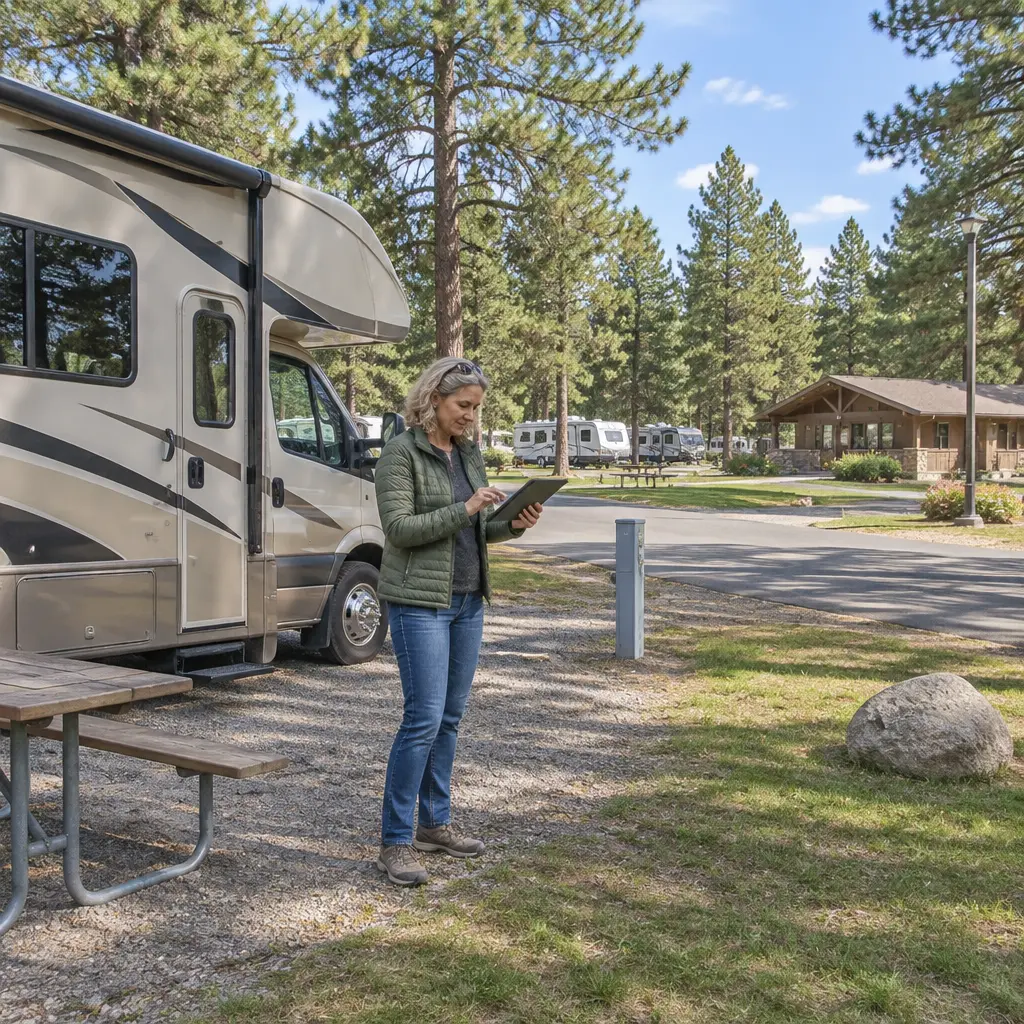
Monthly RV parks are campgrounds and RV resorts that rent sites by the month, often at a lower nightly equivalent than short-stay camping. The best places to find them are specialized RV directories, campground booking marketplaces, and local or state park listings—but availability and monthly rates vary by season, location, utilities, and length-of-stay rules. Comparing several sources matters: the National Association of RV Parks and Campgrounds (ARVC) represents a sector of thousands of privately owned parks, while public lands and commercial directories list different kinds of stays. Below, we explain how to evaluate monthly options and compare RV LIFE Campgrounds, Campendium, The Dyrt, Good Sam, KOA, and local listings.
Monthly RV Park Search Platforms: What They Offer
A monthly RV park search platform is a directory, booking service, or campground network that helps travelers identify RV sites and check availability or contact operators. No single platform is a complete inventory: listings may omit monthly rates, and some parks require direct inquiries rather than online booking. Treat search results as leads, then confirm the total cost and site details with the park.
RV LIFE Campgrounds: RV-Focused Listings and Reviews
RV LIFE Campgrounds is a campground directory designed for RV travelers. Its listings and user reviews can help narrow options by location and amenities, including hookups and site features. It is most useful as a discovery and comparison tool; confirm monthly availability, rate terms, and actual site dimensions with the campground because online listing details can change.
Campendium: Reviews, Location Details, and Road-Trip Context
Campendium combines campground information with traveler reviews and location-based discovery. It can help compare commercial RV parks with other camping options and assess practical factors such as access, surroundings, and reported connectivity. Monthly pricing is not consistently published across parks, so contact the operator to distinguish a genuine monthly rate from a nightly or weekly price.
The Dyrt: Broad Campground Discovery
The Dyrt is a camping search and review platform covering a range of campground types. Its breadth can be helpful when looking beyond traditional RV resorts, but a listed campground may not accept month-long stays or provide full hookups. Verify the property’s RV size limits, utility setup, reservation dates, and long-stay policies before relying on a listing.
Good Sam and KOA: Member and Branded Park Directories
Good Sam’s campground directory and KOA’s network provide recognizable places to start searching. Good Sam listings cover independently operated parks as well as participating locations, while KOA parks follow the brand’s campground system. Neither affiliation guarantees a monthly site or a particular long-stay price. Ask each park whether monthly reservations are available, whether discounts apply, and what services are included.
Monthly RV Park Rates: What Determines the Total Cost
A monthly RV rate is the amount charged for an extended site stay, commonly quoted as a flat fee or as a discounted rate compared with nightly pricing. The actual cost depends on local demand, season, site type, electricity billing, and included services. As a result, a low advertised site fee may not represent the lowest total bill.
Season, Location, and Length of Stay
Seasonal demand can affect both availability and price. Winter destinations in warm-weather states may book well in advance, while parks near major events or popular recreation areas may have limited long-term inventory. Ask whether the quoted rate requires a minimum stay, applies only to specific dates, or changes during peak months. Request the cancellation and early-departure policy in writing.
Utilities, Fees, and Taxes
Monthly quotes differ in what they include. Electricity may be included, metered separately, or subject to a cap; water, sewer, Wi-Fi, laundry, pets, and extra vehicles can also affect the final amount. Ask for an itemized estimate that identifies deposits, taxes, setup fees, and any utility charges. This is the fairest way to compare two parks with different rate structures.
Site Fit and RV Requirements
A site is suitable only if it can safely accommodate the RV and its access needs. Confirm the site’s length and width, road and turn clearance, electrical amperage, sewer connection, and any restrictions on RV age or type. Share your RV’s actual length, slide-out configuration, and power requirements with staff. Photos and reviews are useful clues, but they do not replace confirmation from the park.
Long-Term RV Stays: Park Policies and Practical Checks
A monthly reservation is not always the same as a long-term tenancy. Parks set their own rules for occupancy, guests, pets, mail, quiet hours, and renewals, and local laws can affect how extended stays are treated. Read the agreement before paying a deposit and clarify the rules that matter to your situation.
Utilities and Connectivity
Full hookups generally refer to water, sewer, and electrical service, but the exact setup should be confirmed with the park. If working remotely, ask about internet technology, typical speeds, signal strength at the specific site, and whether cellular service is reliable. Connectivity varies within a property, so request a site-specific answer rather than relying only on a park-wide claim.
Safety, Access, and Everyday Amenities
Review access roads, check-in hours, lighting, laundry, showers, waste disposal, and emergency procedures. Look at recent traveler reviews for recurring concerns, but weigh them against your own needs and the park’s response. If possible, visit or request a video walkthrough before booking a long stay, especially when the reservation is nonrefundable.
Address, Mail, and Local Rules
Some parks accept mail or packages; others do not. A campground’s willingness to receive mail does not automatically make it a valid residence or domicile for tax, vehicle registration, or licensing purposes. Check the relevant state and local requirements independently, and ask the park what address and delivery services it actually provides.
How to Find and Compare Monthly RV Parks
A reliable search combines online discovery with direct verification. Use directories to build a shortlist, then compare written quotes on the same basis. Because monthly rates are often handled directly by individual parks, a phone call or email can uncover options that a booking filter does not show.
- Search multiple platforms for the destination and dates, including RV-focused directories and branded campground networks.
- Contact parks directly and ask about monthly availability, minimum stays, total fees, utility billing, and deposits.
- Confirm site dimensions, hookups, RV restrictions, access, and cancellation terms in writing.
- Compare the full estimated cost, not just the base site rate, and check recent reviews for relevant concerns.
- Keep a backup option, especially during peak travel seasons or in destinations with limited long-stay inventory.
Conclusion: Choose a Monthly RV Park by Total Value
The best websites for finding monthly RV parks are those that help you discover options, compare reviews, and reach campground operators—not necessarily those that publish the lowest headline price. RV LIFE Campgrounds, Campendium, The Dyrt, Good Sam, KOA, and local park directories can each contribute useful leads. Compare rates alongside utilities, site fit, policies, connectivity, and location, and confirm every important term directly with the park. Start with several listings, request itemized quotes, and secure written confirmation before making a long-stay commitment.
Sources: RV LIFE, RV LIFE Campgrounds, https://campgrounds.rvlife.com/; Campendium, Campendium Campground Directory, https://www.campendium.com/; The Dyrt, Campground Search, https://thedyrt.com/; Good Sam, Campground Directory, https://www.goodsam.com/campgrounds-rv-parks; Kampgrounds of America, KOA Campgrounds, https://koa.com/; National Association of RV Parks and Campgrounds, About ARVC, https://www.arvc.org/about-arvc
Related Posts
Setting Up a Year-Round RV Base Camp That Actually Works
A year-round RV base camp is a stationary, weather-ready home site designed to support an [...]
What Professional RV Parks Offer That Regular Campgrounds Don’t
Professional RV parks are purpose-built facilities for recreational vehicles, typically offering planned sites, utility connections, [...]
Monthly RV parking with full hookups versus dry camping, which wins
Monthly RV parking with full hookups is a paid site that typically provides electrical power, [...]