
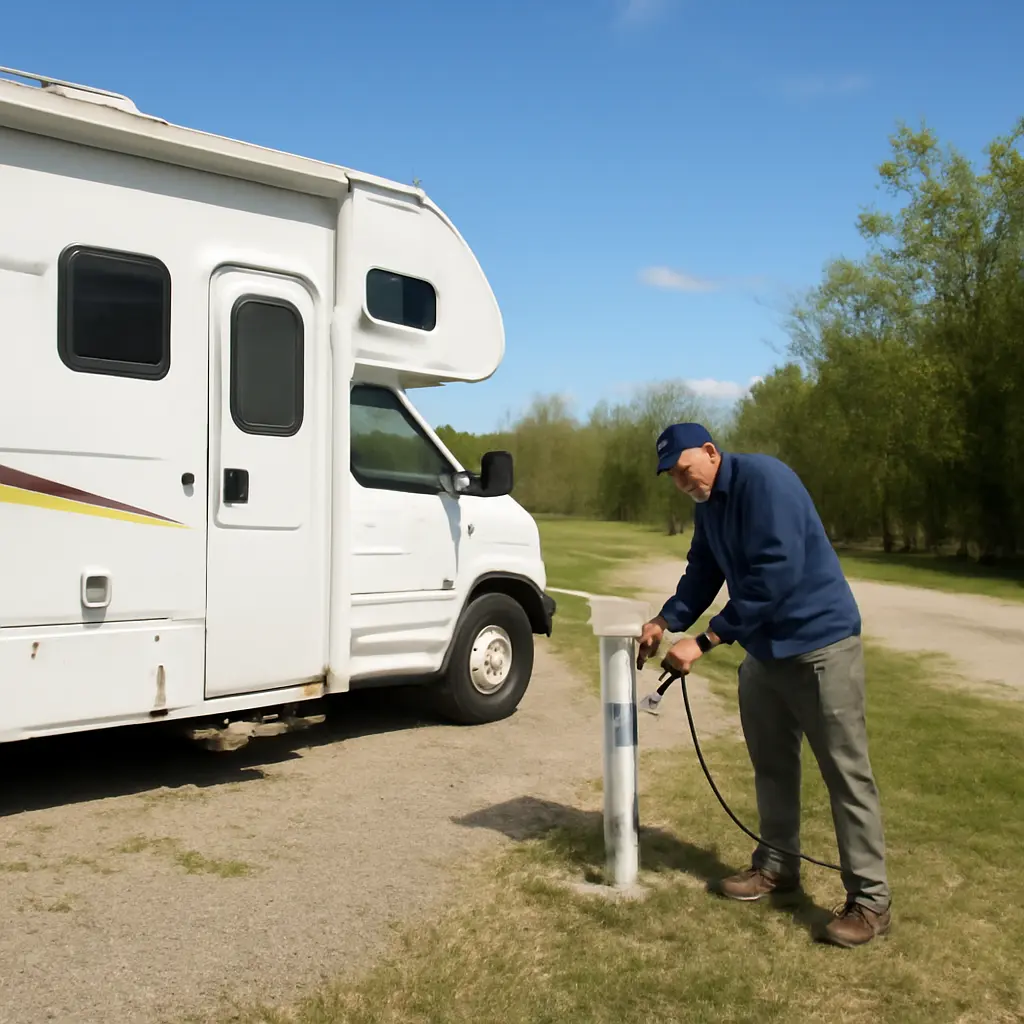
A year-round RV base camp is a stationary, weather-ready home site designed to support an RV through every season, not just a convenient place to park. Making one work means matching the site to the climate, confirming land-use and utility rules, building dependable water, power, and wastewater systems, and planning for cold, heat, storms, and maintenance. The U.S. Energy Information Administration reports that space heating is the largest energy use in U.S. homes, underscoring why insulation and heating deserve special attention in a cold-weather base camp. The practical guide below covers site selection, utilities, seasonal protection, safety, and a realistic operating plan.
Year-Round RV Base Camp Design and Site Planning
“Year-round RV base camp” is a practical description rather than a single standardized building or land-use category. It means an RV parking site and its supporting systems are prepared for continuous or recurring use across local seasons. That distinction matters: an RV that is technically capable of cold-weather travel is not automatically protected against frozen supply lines, poor drainage, wildfire exposure, or a county rule that limits long-term occupancy.
The National Fire Protection Association’s RV guidance and the Recreation Vehicle Industry Association’s owner resources emphasize that RV systems and safe operation depend on the vehicle, equipment, and conditions. Treat the base camp as a system: the RV, the pad, utility connections, access route, drainage, and emergency plan must work together. The following site-selection steps connect those elements before money is spent on improvements.
Choose the climate and exposure before choosing the pad
Climate suitability means assessing the hazards and seasonal loads at the actual property, rather than relying on a broad label such as “mild winters.” Check local records for low temperatures, snowfall, wind, heat, flood risk, wildfire conditions, and seasonal road closures. NOAA’s climate products and the Federal Emergency Management Agency’s Flood Map Service Center can help identify historical climate patterns and mapped flood hazards, although neither replaces an on-site assessment or local professional advice.
Prefer firm, well-drained ground outside floodways and obvious runoff channels. A site that looks level in summer can become inaccessible in a wet season, while a wind-exposed ridge may increase heating demand and storm risk. Consider sun and shade together: winter solar gain can help warm the RV, but shade and ventilation are valuable during hot weather. Keep trees, branches, propane equipment, generators, and combustible materials arranged with fire and clearance safety in mind.
Confirm land-use, occupancy, and access rules
Land-use feasibility is the legal permission to park and occupy an RV at the site for the intended duration. Rules differ by state, county, municipality, zoning district, and private community. Before buying land or installing hookups, ask the planning and building departments about RV occupancy, accessory-use limits, permits, septic approval, well requirements, electrical work, driveway access, and any minimum dwelling or inspection rules. Obtain answers in writing when possible; a property listing or seller’s assurance is not a zoning determination.
Access is part of the site plan, not an afterthought. Verify that the RV can reach and turn into the pad without striking branches, bridges, gates, or overhead wires. Check road grades and winter maintenance responsibilities, then identify a safe turnaround or exit route. For a long rig, measure the full combination—including tow vehicle, slides, awnings, and service access—rather than relying on a generic pad-length estimate.
Year-Round RV Base Camp Utilities and Infrastructure
A durable base camp needs water, wastewater, and electrical service sized for the RV and its actual use. Each connection has a different failure mode: water lines can freeze or become contaminated, drains can freeze or overload, and electrical equipment can be undersized or improperly grounded. Plan these systems as a coordinated installation and use licensed professionals where permits or safety codes require them.
Water supply, freeze protection, and testing
A reliable water system delivers adequate flow while protecting the source, plumbing, and occupants. Options include an approved municipal connection, a permitted private well, or a managed filling and storage arrangement where local rules allow it. For a well, the U.S. Environmental Protection Agency recommends testing private-well water at least once a year for total coliform bacteria, nitrates, total dissolved solids, and pH, as well as testing for local contaminants when relevant. A water test is especially important after flooding, repairs, or a change in taste, color, or odor.
Freeze protection includes burying or insulating lines to suit local conditions, protecting exposed fittings, and providing a way to drain or shut down the system. A heated hose can help, but it is not a substitute for a protected connection, a correctly rated electrical supply, or a cold-weather shutdown plan. Know which parts of the RV are heated and which are exposed; many RVs have vulnerable valves, tanks, and plumbing beneath the insulated living space.
Wastewater, septic capacity, and legal disposal
Wastewater planning means providing a permitted destination for both blackwater and graywater without contaminating soil, groundwater, or surface water. Do not assume an RV sewer inlet can be connected to any convenient pipe or septic tank. Local health departments generally regulate septic design, installation, and use, and the system must be sized and approved for the expected flow. The EPA identifies proper septic-system maintenance as important to protecting public health and water resources.
Ask the permitting authority to confirm whether the existing system is approved for RV use and whether its design capacity covers the base camp’s occupants and usage. Keep sewer hoses supported and connections secure, follow the RV manufacturer’s dumping instructions, and never discharge wastewater onto the ground or into storm drains unless a specific local rule expressly permits an approved method. A professional inspection can identify tank, baffle, drain-field, or access problems before they become costly failures.
Electrical service, shore power, and backup
Electrical readiness means supplying the RV’s required voltage and amperage through correctly rated, protected equipment. A 30-amp RV and a 50-amp RV do not have interchangeable service needs; check the RV’s label and manual before installing a pedestal. Have a qualified electrician verify the circuit, grounding, overcurrent protection, receptacle, and local permit requirements. Use a suitable surge protector or electrical management system, and avoid undersized extension cords or improvised adapters as permanent hookups.
Backup power should be designed around essential loads, such as refrigeration, communications, medical equipment, water pumps, and safe heating controls. A generator must operate outdoors, well away from doors, windows, and vents, because carbon monoxide is odorless and potentially fatal. The Centers for Disease Control and Prevention advises keeping portable generators outside and at least 20 feet from the home when possible, with exhaust directed away from buildings. Install and maintain carbon-monoxide alarms as directed by the RV and alarm manufacturers; never run a generator inside an RV, garage, or enclosed shelter.
Year-Round RV Base Camp Comfort and Seasonal Protection
A base camp is genuinely year-round only when its thermal protection, ventilation, and weather response match the local extremes. RVs vary substantially in insulation, tank placement, window design, and heating capacity, so there is no universal temperature at which every model is safe. Use the owner’s manual and manufacturer guidance as the first reference, then test the setup before a severe cold snap or heat wave.
Cold-weather readiness and freeze prevention
Cold-weather readiness is the combination of heat, insulation, airflow, and plumbing protection needed to prevent unsafe indoor conditions and frozen systems. Inspect seals around windows, doors, roof vents, and slide-outs; repair leaks; and use only manufacturer-approved insulation or skirting arrangements. Skirting may reduce wind exposure beneath an RV, but it can also trap moisture or create a hazard if heating equipment is misused. Do not use an unvented or unapproved heater as a substitute for the RV’s designed heating system.
Keep an eye on interior humidity and condensation as well as temperature. Ventilation, safe dehumidification, and prompt repair of water leaks help limit mold and material damage. In freezing weather, maintain heat around vulnerable plumbing if the RV design allows it, monitor utility connections, and have a shutdown plan for power loss. If the manufacturer’s instructions call for winterization under the expected conditions, follow them rather than assuming a heated cabin protects every water line.
Heat, ventilation, and summer comfort
Hot-weather protection reduces indoor heat gain while preserving safe ventilation. Use shade where practical, keep roof and window seals in good condition, and make sure air-conditioning equipment has the electrical supply it requires. Maintain air filters and rooftop units according to the manual, and avoid blocking return-air pathways. A shaded outdoor living area can improve comfort, but awnings should be retracted when wind or storms threaten.
Heat safety also means planning for outages. Identify a cooler nearby location, keep drinking water available, and check local heat alerts. The National Weather Service recommends taking heat warnings seriously and checking on people who may be more vulnerable. A generator can provide backup only when operated outdoors with safe clearances and adequate capacity; it should never be treated as a reason to ignore carbon-monoxide precautions or electrical limits.
Storm, wildfire, flood, and evacuation planning
Hazard planning is a written decision process for protecting people and property when conditions exceed the RV or site’s limits. FEMA’s Ready.gov guidance recommends having an emergency plan, knowing local alerts, and preparing supplies. For an RV base camp, the plan should state where to go, which roads remain usable, how to disconnect utilities, where documents and medications are stored, and how much time is needed to make the RV travel-ready.
Wildfire-prone sites need defensible space and a clear evacuation trigger consistent with local fire authority guidance. Flood-prone areas require special caution: an RV can be displaced or trapped by rapidly rising water, and a mapped flood zone is not the only place flooding can occur. Do not wait for water to reach the pad before leaving. For severe wind, hail, or snow loading, follow official alerts and the RV manufacturer’s limits rather than assuming the vehicle is a safe shelter for every event.
Year-Round RV Base Camp Operations and Maintenance
Operational readiness turns a well-built site into a dependable one. A base camp needs routine inspections, a realistic budget, spare supplies, and clear responsibilities for maintenance. The Recreation Vehicle Industry Association and RV manufacturers publish maintenance guidance because seals, tires, appliances, electrical connections, and plumbing all require inspection over time. Keep records of service, permits, water tests, and repairs in one accessible place.
Create a seasonal inspection routine
A seasonal inspection is a repeatable check of the RV and site before weather changes. Inspect the roof and sealants for damage, test alarms, check fire extinguishers, examine tires, confirm utility connections, clear drainage paths, and verify that emergency equipment works. Follow the RV manual for service intervals and appliance checks; the correct schedule depends on the model and usage, not a one-size-fits-all calendar.
- Before winter: test heating, inspect exposed plumbing, confirm freeze protection, and review the power-loss plan.
- Before summer: service cooling equipment, inspect awnings and shade structures, and clear vegetation near the RV.
- After major storms: check for roof, slide, utility, drainage, and access damage before resuming normal use.
- Monthly or as appropriate: test smoke and carbon-monoxide alarms, check for leaks, and record utility or equipment issues.
Budget for the full cost of staying put
A realistic base-camp budget includes more than the land or monthly site cost. Include utility installation, permits, insurance, fuel, propane, electricity, water testing, septic pumping or inspection, internet, repairs, winter protection, storm preparation, and travel or relocation costs. Costs vary widely by region and property, so obtain local contractor estimates and utility quotes rather than relying on national averages. Keep a reserve for urgent repairs and temporary lodging if the RV or site becomes unsafe.
A useful planning tool is a simple annual calendar showing expected bills, inspections, weather risks, and maintenance tasks. For example, a high-desert site may prioritize summer heat, dust, and water supply, while a northern site may devote more resources to snow access, frozen plumbing, and heating fuel. The base camp should be adapted to its own climate and household needs rather than copied wholesale from another owner’s setup.
Plan connectivity and everyday resilience
Connectivity resilience means maintaining dependable access to communication, information, and essential services when one system fails. Test cellular coverage at the actual parking location and at different times of day. If using satellite internet, consider clear-sky requirements, power consumption, mounting, and severe-weather performance. Keep local emergency numbers, utility contacts, medical information, and offline maps available in case internet or mobile service is interrupted.
Real-world planning is often a matter of matching the base camp to the dominant local risk. In a cold region, a family might choose a site with maintained winter access, a permitted electrical pedestal, protected water lines, and a nearby alternative place to stay during prolonged outages. In a wildfire region, the equivalent priorities may be defensible space, reliable alerts, and an evacuation route that remains usable while the RV is hitched. These examples illustrate why the best base camp is not necessarily the most elaborate one; it is the one whose systems and exit plan fit the conditions.
Conclusion: Make the RV Base Camp Work Before You Need It
A successful year-round RV base camp begins with a suitable site and lawful occupancy, then depends on properly planned water, wastewater, electrical service, and climate protection. Seasonal readiness, hazard planning, routine maintenance, and a realistic budget turn those installations into a reliable living setup. Because RV designs and local rules differ, confirm requirements with the relevant authorities and the RV manufacturer, and use qualified professionals for regulated utility work.
Start with a written site checklist: verify zoning, assess climate and hazards, confirm utility feasibility, and price the upgrades before committing. Then build a seasonal maintenance and evacuation plan, test it, and update it as conditions change. For further research, consult your county planning and health departments, FEMA hazard resources, EPA private-well and septic guidance, and the owner’s manual for your specific RV.
Sources: U.S. Energy Information Administration, Use of Energy Explained: Energy Use in Homes, https://www.eia.gov/energyexplained/use-of-energy/homes.php; Recreation Vehicle Industry Association, RV Owner Resources, https://www.rvia.org/rv-owners; National Fire Protection Association, RV Safety, https://www.nfpa.org/education-and-research/home-fire-safety/rv-safety; National Oceanic and Atmospheric Administration, Climate Data Online, https://www.ncei.noaa.gov/cdo-web/; Federal Emergency Management Agency, Flood Map Service Center, https://msc.fema.gov/portal/home; U.S. Environmental Protection Agency, Private Drinking Water Wells, https://www.epa.gov/privatewells; U.S. Environmental Protection Agency, Septic Systems, https://www.epa.gov/septic; Centers for Disease Control and Prevention, Carbon Monoxide Poisoning and Portable Generators, https://www.cdc.gov/carbon-monoxide/about/generators.html; Federal Emergency Management Agency, Ready.gov, https://www.ready.gov/.
Related Posts

What Properly Designed Indoor RV Parking Spaces Actually Look Like
Indoor RV Parking Spaces and Their Essential Design Attributes Indoor RV parking spaces refer to [...]
What Professional RV Parks Offer That Regular Campgrounds Don’t
Professional RV parks are purpose-built facilities for recreational vehicles, typically offering planned sites, utility connections, [...]

Practical Comfort Features That Separate Average Indoor RV Facilities From the Best
Practical Comfort Features and Indoor RV Facilities Indoor RV facilities serve as vital components in [...]