
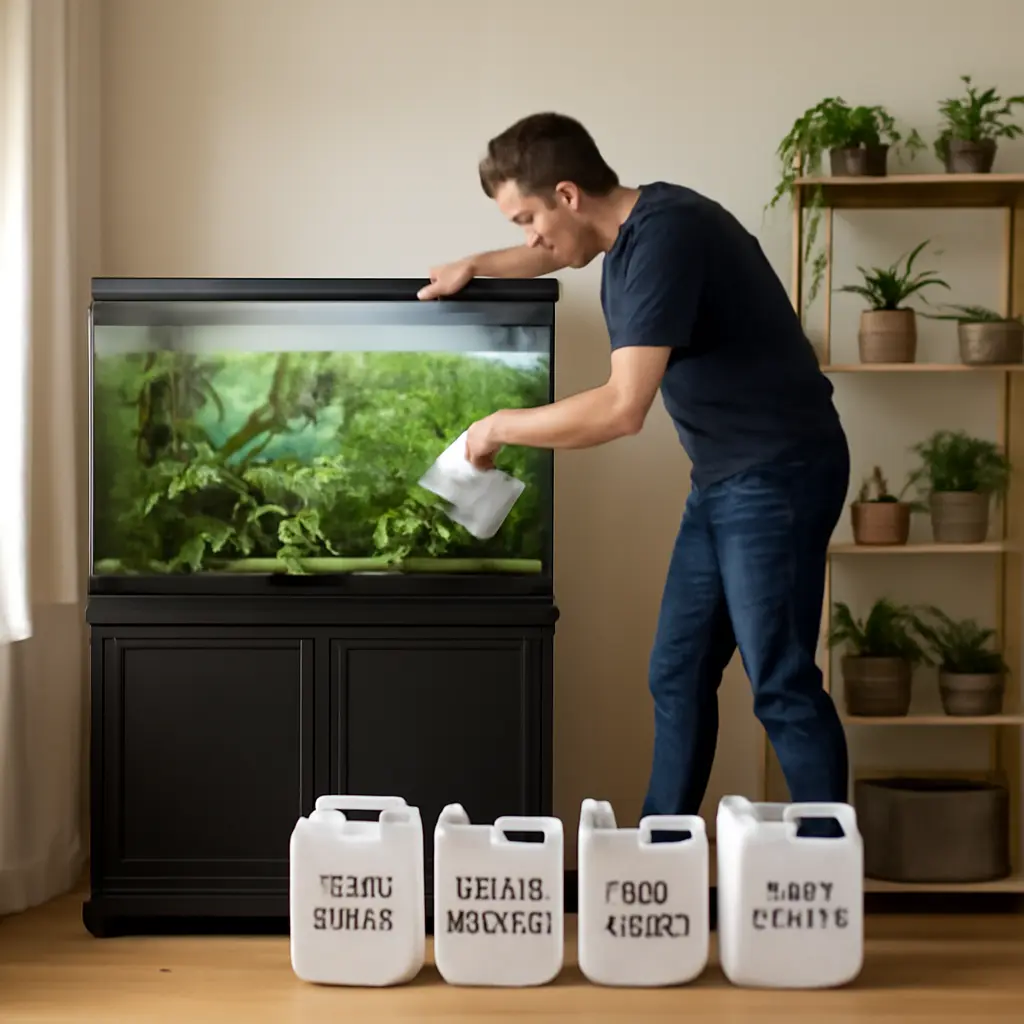
A freshwater aquarium is a contained aquatic habitat that depends on a reliable supply of clean, conditioned water to support fish, plants, and beneficial microorganisms. The safest way to keep a tank from running dry is to plan for evaporation, leaks, water changes, and emergencies separately: top off evaporation with appropriately prepared water, maintain a routine water-change supply, and keep enough equipment and reserve water on hand to respond to a leak or outage. The U.S. Geological Survey notes that water’s suitability depends on its physical, chemical, and biological characteristics; for aquariums, that means matching replacement water to the tank rather than treating all “freshwater” as interchangeable. This guide explains how to estimate demand, choose and store water, automate routine top-offs safely, and prepare for failures that can threaten both water quality and animal welfare.
Freshwater aquarium water planning: what a dependable supply means
A dependable aquarium water plan is a practical system for supplying water of suitable quality, in the right amount, when routine maintenance or an unexpected event requires it. It includes a demand estimate, a source-water check, treatment and storage procedures, and a response plan for leaks or interruptions. Aquarium guidance from the RSPCA emphasizes that water quality is central to fish health and that tap water must be treated to remove chlorine or chloramine before use. Those disinfectants protect public health in drinking-water systems but can harm fish and beneficial filter bacteria.
“Running dry” can mean more than an empty tank. Evaporation lowers the waterline, while a leak can rapidly expose equipment or leave fish without adequate water. Meanwhile, a tank that remains full can still suffer from poor water quality if its keeper has no prepared water for a scheduled change. A useful plan distinguishes three needs: evaporation top-offs, planned water changes, and emergency replacement water.
Evaporation top-offs
A top-off replaces water lost to evaporation. Water evaporates, but most dissolved minerals and salts remain behind, so topping off with mineral-containing tap water can gradually increase hardness or total dissolved solids. For a freshwater tank, use water appropriate to the aquarium’s chemistry; in many setups, reverse-osmosis or distilled water is used for evaporation replacement, sometimes remineralized when required by the species and system. Do not assume that every tank should receive pure distilled water: the correct choice depends on its inhabitants and established water parameters.
Measure the waterline and note how much the tank loses over several days. Evaporation varies with room temperature, humidity, surface agitation, lighting, and whether the aquarium has a lid. A repeatable weekly measurement gives a better estimate than guessing from the waterline alone.
Planned water changes
A water change removes some aquarium water and replaces it with prepared water to help manage accumulated waste and maintain suitable chemistry. The appropriate volume and frequency depend on stocking, feeding, filtration, plants, and test results; there is no single percentage that fits every aquarium. Before changing water, check that the replacement water is treated and close enough in temperature and chemistry to avoid unnecessary stress. The RSPCA advises regular monitoring of aquarium water, including checks for harmful nitrogen compounds such as ammonia and nitrite.
Keep water-change water separate from evaporation top-off water in your planning. A tank may lose little to evaporation but still need regular changes, or lose substantial water in a warm, dry room while requiring a different replacement-water treatment.
Emergency replacement water
Emergency water is a prepared reserve for leaks, equipment failure, contamination, or an urgent water-quality problem. It should be stored in clean, food-safe containers that have never held soap, chemicals, or other contaminants, clearly labeled, and kept away from heat and direct sunlight. Store only water you can safely maintain and rotate according to the treatment product and container guidance; untreated tap water is not automatically ready for aquarium use.
A reserve is most useful when paired with a response plan: know where a siphon, spare heater, air pump, and clean containers are kept, and know how to move fish safely if the aquarium itself is leaking. This connects routine supply planning to the broader goal of keeping water stable during a disruption.
Freshwater aquarium demand: estimate how much water to keep available
Water demand is the amount needed for routine top-offs, planned changes, and a reasonable emergency margin. Estimate each category independently, then combine them into a practical reserve target. This simple inventory helps prevent both shortages and excessive storage of water that may become unsuitable or difficult to manage.
Measure the tank’s actual volume
The advertised tank size is not the same as the volume of water it holds. Substrate, rocks, wood, and equipment displace water, while the tank is usually not filled to its rim. Use the amount of water added during setup, if recorded, or estimate the operating volume and treat it as an approximation. This matters when calculating a water change, dosing conditioner, or moving fish in an emergency.
Track weekly losses and maintenance
For two to four weeks, record how much water is added for evaporation and how much is prepared for each water change. Note unusual conditions such as a heat wave, an open lid, or increased aeration. A simple log can include date, water added, water removed, conditioner used, and test results for temperature, pH, ammonia, nitrite, and nitrate. The resulting pattern is more useful than a generic estimate because aquarium water loss and maintenance needs vary from one home to another.
- Top-off demand: the measured volume needed to restore the normal waterline.
- Water-change demand: the replacement volume for the planned maintenance schedule.
- Emergency margin: additional treated water or access to a safe source if normal supplies are interrupted.
Use test results to adjust the plan
Water tests help determine whether the maintenance plan is working. Ammonia and nitrite should be kept at levels appropriate for a healthy, cycled aquarium; detectable amounts can signal a problem, particularly in a newly established tank or after filter disruption. Nitrate trends can help inform maintenance, but acceptable levels depend on the animals and plants being kept. Test both aquarium water and the source water when results are unexpected. A water source that changes seasonally or after local treatment work may require a revised approach.
Freshwater aquarium water quality: choose and prepare the right source
Water quality is the set of physical, chemical, and biological characteristics that determine whether water is suitable for a particular use, as described by the U.S. Geological Survey. In aquarium care, source water must be safe from harmful contaminants and compatible with the tank’s established conditions. “Clear” water is not necessarily safe, and water labeled as drinking water is not automatically ready for fish.
Municipal tap water
Tap water is convenient, but municipal supplies may contain chlorine or chloramine and may differ in pH, hardness, and dissolved minerals. Use an aquarium water conditioner labeled for the disinfectant in your supply, and follow its directions for the volume being treated. The U.S. Environmental Protection Agency sets drinking-water requirements for public systems, but those standards are designed for human use, not to guarantee aquarium suitability. If you are unsure whether your utility uses chlorine or chloramine, consult its annual water-quality report or contact the provider.
Reverse-osmosis and distilled water
Reverse-osmosis and distilled water contain fewer dissolved minerals than typical tap water. They can be useful when source-water hardness or other chemistry is unsuitable, but low-mineral water may need remineralization for fish and plants. Use a consistent preparation method and test the finished water rather than relying on the source label alone. Sudden changes in hardness or other parameters can stress aquatic animals, so adjust water chemistry deliberately.
Private wells and alternative sources
Well water and water from other private sources can vary in minerals, metals, and other characteristics. Do not treat it as safe merely because it looks clean or has been used for drinking. Test relevant parameters and consult a qualified water-testing laboratory when the source is unknown or concerns arise. Avoid collecting aquarium water from natural ponds, streams, or rain barrels unless it has been specifically assessed and treated: contaminants and disease organisms may be difficult to detect by sight.
Freshwater aquarium top-offs: automate routine supply without creating new risks
An automatic top-off system uses a sensor to add water as evaporation lowers the level. It can reduce daily effort, particularly in tanks with high evaporation, but it is not a substitute for water changes or water-quality monitoring. Because a failed sensor or stuck valve can add too much water, automation should include safeguards and regular inspection.
Choose an appropriate sensor and reservoir
Float switches and optical sensors detect a low water level and trigger a pump or valve. Select equipment intended for aquarium use, position the sensor where waves or splashes will not cause false readings, and limit the reservoir so a malfunction cannot add an unlimited amount of water. Keep electrical connections dry and use a drip loop on cords. Follow the manufacturer’s instructions and test the system while supervised before relying on it.
Match the top-off water to the tank
An automated system should dispense water prepared for evaporation replacement, not automatically draw untreated tap water. Since evaporation leaves dissolved minerals behind, the top-off source should be selected in light of the tank’s water chemistry and species. Mark the reservoir clearly and avoid storing chemicals or treatment concentrates in a container that could be mistaken for ready-to-use water.
Inspect and test the system
Check the sensor, pump, tubing, and reservoir regularly for salt or mineral deposits, clogs, leaks, and stuck components. Confirm that the waterline is behaving as expected and that the reservoir is not being emptied unusually quickly. Automated convenience is safest when paired with a visible water-level limit and a manual backup plan.
Freshwater aquarium emergencies: respond to leaks and supply interruptions
An aquarium emergency can involve a cracked tank, failed seal, power outage, pump failure, or accidental contamination. The first priority is protecting people from electrical hazards, then preventing further water loss and keeping fish adequately oxygenated. A prepared kit and a short written checklist can make response faster and reduce avoidable stress.
For a leak or structural failure
If the tank is leaking, unplug equipment only when it is safe to do so, and keep water away from outlets and power strips. Move fish to a clean, food-safe container with water from the aquarium when possible, then maintain appropriate temperature and aeration. Do not use a container that has held household cleaners. If the tank’s structure is compromised, do not rely on a temporary patch as a long-term repair.
For a power or filtration outage
A power interruption can stop filtration, heating, and water movement. Battery-powered air pumps can help maintain oxygenation, especially in heavily stocked tanks, but they do not replace a functioning filter. Keep spare batteries or a charged backup pump where they can be found quickly. Avoid feeding heavily during an outage, because uneaten food and waste can worsen water quality. Restore equipment carefully and check water parameters after service resumes.
For contaminated or unsuitable replacement water
If replacement water has been prepared incorrectly or its source is suspect, pause before adding it. Confirm the conditioner, temperature, and relevant water parameters; when contamination is suspected, seek advice from an aquatic veterinarian or experienced aquarium professional. During a local drinking-water advisory, follow the utility’s instructions and do not assume boiling will remove every concern: boiling does not remove all chemical contaminants and can concentrate some dissolved substances.
Freshwater aquarium water plan: a practical checklist
A reliable plan turns water care into a repeatable routine rather than a last-minute scramble. Use this checklist to make the system specific to your aquarium and household.
- Record the aquarium’s approximate operating volume, livestock, and normal waterline.
- Measure evaporation and water-change demand for several weeks.
- Identify the source-water disinfectant and test important source and tank parameters.
- Keep conditioner, clean containers, a siphon, and basic test supplies accessible.
- Prepare and label a modest emergency reserve, and rotate it as appropriate.
- If using an automatic top-off, limit reservoir capacity and inspect the system regularly.
- Write down what to do for a leak, power outage, or unexpected test result.
A simple visual aid can make the plan easier to follow: a weekly water log showing tank level, top-off volume, water-change volume, and test results can reveal trends before they become urgent. Treat unusual changes as prompts to investigate, not as a reason to make abrupt adjustments without testing.
Conclusion: keep freshwater aquarium water available before it is needed
A freshwater tank stays safer when its keeper plans separately for evaporation top-offs, routine water changes, and emergencies. Estimating actual demand, checking source-water quality, treating and storing water correctly, and adding safeguards to automated systems all reduce the chance that a shortage becomes a crisis. Water clarity alone cannot confirm water safety, and a full tank is not necessarily a healthy one; testing and consistent maintenance matter.
Start by recording your tank’s weekly water use and checking your local water-quality report. Then assemble a small, clearly labeled supply kit and write down your response steps for leaks or outages. For further guidance, consult your water utility, the RSPCA’s aquarium-care resources, and reputable aquarium professionals who understand the needs of your particular fish and plants.
Sources: U.S. Geological Survey, Water Quality, https://www.usgs.gov/special-topics/water-science-school/science/water-quality; RSPCA, Tropical fish: water quality, https://www.rspca.org.uk/adviceandwelfare/pets/fish/tropical/waterquality; U.S. Environmental Protection Agency, National Primary Drinking Water Regulations, https://www.epa.gov/ground-water-and-drinking-water/national-primary-drinking-water-regulations; U.S. Environmental Protection Agency, Consumer Confidence Reports, https://www.epa.gov/ccr
Related Posts

Utility Access and Climate Control Features in Premium Heated Storage
Utility Access in Premium Heated Storage Premium heated storage units refer to high-end storage solutions [...]

How Indoor Heated Storage Beats Traditional Cold-Weather RV Strategies
Indoor Heated Storage and Its Advantages for Cold-Weather RV Preservation Indoor heated storage refers to [...]

What to Consider Before Deciding Between Indoor or Outdoor RV Parking
Indoor vs. Outdoor RV Parking: Key Considerations for Storage Decisions Recreational Vehicle (RV) owners face [...]