
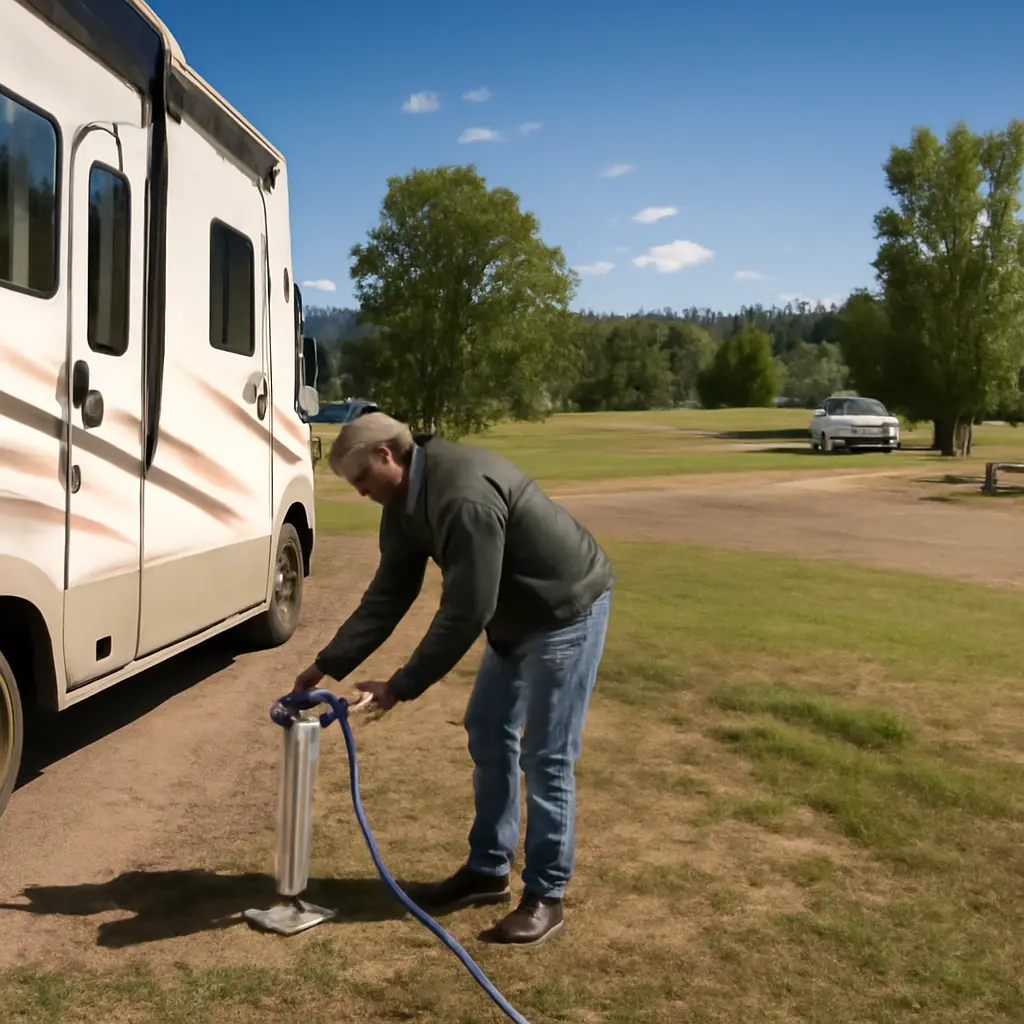
Monthly RV parking with full hookups is a paid site that typically provides electrical power, water, and sewer connections; dry camping means staying without those utility connections, often in a public campground or dispersed area. For a month-long stay, full hookups usually win on convenience and predictable access to utilities, while dry camping can win on price and solitude—if the location allows extended stays and your rig, water supply, batteries, and waste capacity can handle it. The best choice depends on the total cost, not just the nightly rate: campground fees, electricity, propane, dump fees, travel, and the work of resupplying all matter.
Monthly RV parking costs favor dry camping—but not always
There is no single national monthly price that fairly compares these options. Rates vary by region, season, site type, and included utilities, and some parks charge separately for electricity. A useful comparison is to calculate the actual cost of the entire stay rather than multiply a nightly rate by 30 and assume everything else is included.
For a full-hookup site, ask whether the monthly price includes electricity, water, sewer, Wi-Fi, and taxes. For dry camping, include campground or land-use fees where applicable, plus fuel for generator use, propane, dump-station fees, and trips to refill water or supplies. The National Park Service and Bureau of Land Management also impose location-specific rules, fees, and stay limits, so dispersed camping is not necessarily free or available for a full month.
Full-hookup monthly sites
A full-hookup site generally has a connection for electricity, potable water, and sewer. Monthly rates can reduce the effective daily price compared with short stays, but the deal may have conditions such as a separate electric meter, a deposit, seasonal dates, or a minimum stay. Ask the operator for a written estimate of the complete monthly bill before booking.
Dry-camping costs
Dry camping removes the usual water, sewer, and electrical connections at the site. Some public lands allow dispersed camping without a campsite fee, while developed dry-camping campgrounds may charge fees. Even when the site itself is inexpensive, generator fuel, propane, paid dumping, and transportation to services can narrow the savings.
A practical break-even calculation
Compare two totals for the same dates and location: the full-hookup monthly quote, including metered electricity and fees, and the dry-camping site cost plus utilities, fuel, dumping, water runs, and any extra travel. If dry camping requires frequent relocation because of stay limits, include the cost of moving. That calculation is more useful than a broad claim that one option is always cheaper.
Full hookups improve convenience and utility access
Full hookups are most valuable when the RV is a primary home, the stay is long, or everyday electricity and water use are substantial. With a sewer connection, you usually do not need to move the RV to empty holding tanks; with a water connection, you do not need to ration onboard supply in the same way. These benefits can matter more than the monthly rate for households working remotely or living aboard full-time.
Power for daily living
An electrical hookup can support common appliances and reduce dependence on batteries or a generator, subject to the site’s amperage and the RV’s electrical system. Check whether the site offers 30-amp or 50-amp service and whether electricity is included or metered. High-demand appliances such as air conditioners may exceed what a smaller connection can support when several devices run at once.
Water and sewer reduce routine chores
A water connection provides a convenient supply, but RV owners should use a potable-water-rated hose and appropriate pressure control. Sewer hookups also require correct hose setup and good sanitation practices. Connections do not remove the need to monitor tanks, inspect hoses, or follow campground rules.
A better fit for fixed, month-long routines
A long-term site can suit travelers who need stable internet, predictable workdays, accessible laundry, or frequent use of climate control. However, the campsite itself does not guarantee reliable internet or quiet conditions. Verify connectivity, site rules, accessibility, and cancellation terms rather than assuming the monthly rate covers every practical need.
Dry camping trades amenities for independence
Dry camping describes camping without utility hookups at the site; it does not necessarily mean boondocking on public land. It can include a paid campground with no connections, a permitted dispersed campsite, or another location where the camper supplies power and manages water and waste. The shared constraint is that the RV must operate independently between service stops.
Boondocking and dispersed camping
Boondocking commonly refers to self-contained camping outside developed RV parks, often on public lands. Rules differ by managing agency and location. The Bureau of Land Management says visitors must follow local restrictions and posted stay limits; many BLM areas use a 14-day limit within a 28-day period, but local orders can differ. A month-long stay may therefore require moving, and travelers should confirm the rules for the specific site before arrival.
Batteries, solar, and generators
Dry campers meet electrical needs through a combination of batteries, solar panels, alternator charging, and sometimes a generator. Solar output depends on weather, shade, season, panel orientation, and energy demand. Generators can provide dependable power but use fuel, make noise, and may be limited by campground hours or land-use rules. Estimate daily consumption and test the system before committing to a long stay.
Water capacity and waste management
Without a water hookup, the RV’s fresh-water tank and conservation habits set the interval between refills. Gray- and black-water tanks likewise determine how long the rig can remain in place before dumping. Tank size, number of occupants, shower habits, and cooking all change the answer. Plan legal disposal and potable-water access in advance; never dump wastewater on the ground.
The better choice depends on the traveler and the stay
Neither option wins for every RV owner. Full hookups generally win for ease and routine; dry camping generally wins for access to more remote settings and potentially lower site costs. The deciding factors are the trip’s duration, location, utility needs, rig capability, and tolerance for resupply and relocation.
Choose full hookups when reliability matters most
A full-hookup monthly site is usually the safer choice when you work online, need substantial power, travel with a large household, or do not want frequent water and dump runs. It is also practical in extreme heat or cold, when climate-control needs can strain an off-grid power system. Confirm that the hookups match the RV and that the quoted rate reflects actual utility costs.
Choose dry camping when flexibility and setting matter most
Dry camping can be a strong fit for travelers with adequate battery capacity, solar or generator options, generous tank capacity, and flexible schedules. It can also provide a quieter or more remote experience than a crowded RV park. Before treating it as a month-long bargain, verify land access, stay limits, fire restrictions, road suitability, and the distance to water, fuel, and dumping facilities.
Use a short trial before a month-long commitment
If you are unsure, test your dry-camping setup for several days before relying on it for a month. Track battery state, water consumption, tank levels, generator hours, and resupply costs. For either option, inspect the exact site when possible and confirm whether your RV’s length, slide-outs, electrical service, and sewer fittings are compatible.
Conclusion: full hookups win on ease; dry camping can win on value
Monthly RV parking with full hookups offers reliable access to power, water, and sewer, making it the more convenient choice for many extended stays. Dry camping can reduce site expenses and open up more independent camping opportunities, but only when equipment, land rules, and resupply plans make the stay workable. Compare complete costs, check local regulations and stay limits, and match the site to your actual utility needs before booking.
For further planning, review the relevant public-land agency’s current camping rules and ask any campground for a complete monthly quote, including electricity and fees. A simple written comparison can reveal whether the lower advertised rate is genuinely the better deal.
Sources: Bureau of Land Management, Camping on Public Lands, https://www.blm.gov/programs/recreation/camping; Bureau of Land Management, Camping, https://www.blm.gov/programs/recreation/camping/camping; National Park Service, Camping, https://www.nps.gov/subjects/camping/index.htm; National Park Service, Leave No Trace, https://www.nps.gov/articles/leave-no-trace-seven-principles.htm
Related Posts

If You Want Hassle-Free RV Life These Full Hookup Features Matter Most
Full Hookup Amenities and Hassle-Free RV Living Full hookup RV sites are designated camping spots [...]
Setting Up a Year-Round RV Base Camp That Actually Works
A year-round RV base camp is a stationary, weather-ready home site designed to support an [...]

What Properly Designed Indoor RV Parking Spaces Actually Look Like
Indoor RV Parking Spaces and Their Essential Design Attributes Indoor RV parking spaces refer to [...]