
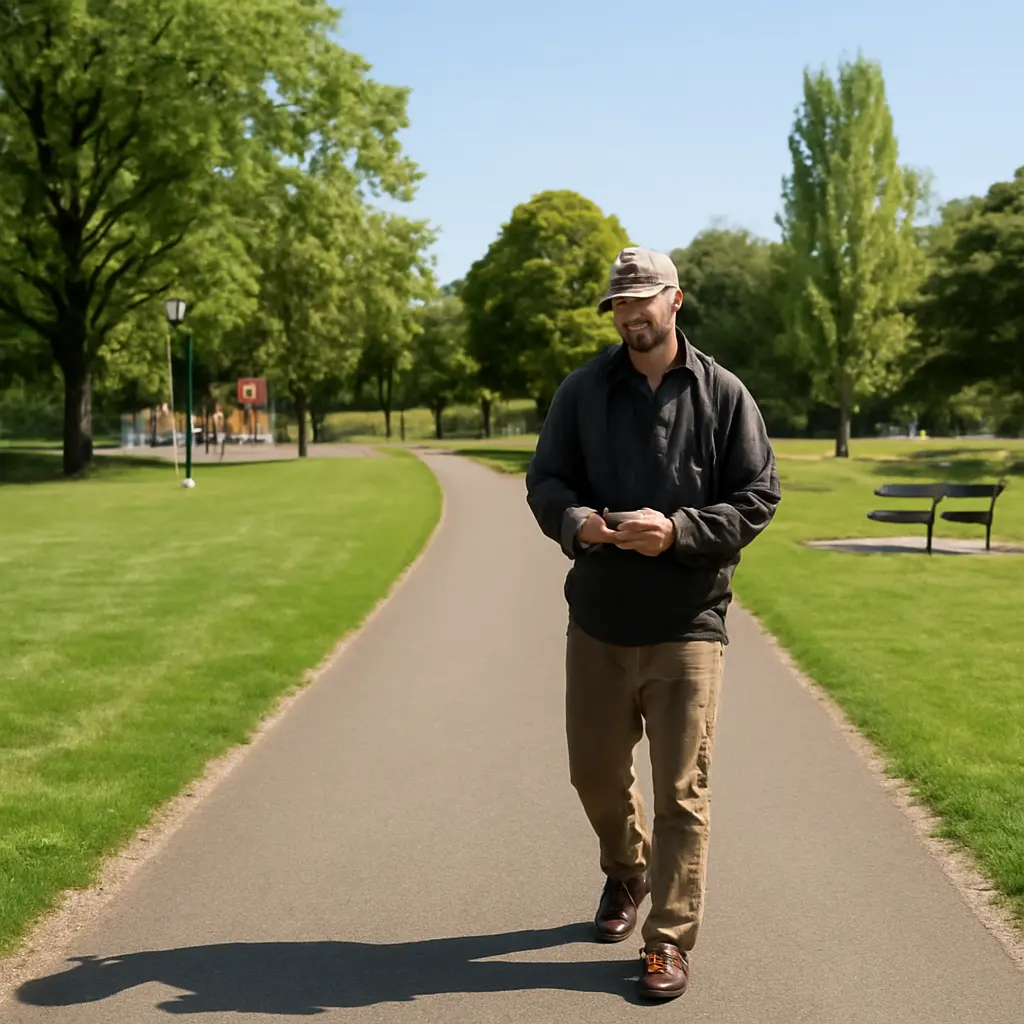
Walking dozens of parks reveals that safety usually breaks down at the points where upkeep, visibility, access, and day-to-day management meet. A park is a public outdoor space designed for recreation and community use, but its safety depends on more than crime rates: broken lights, hidden paths, damaged play equipment, poor sightlines, and delayed maintenance can all make people feel or become less safe. The U.S. Centers for Disease Control and Prevention (CDC) identifies access to parks and other places for physical activity as an important part of community health, while research on crime prevention emphasizes the roles of visibility, maintenance, and regular use. Looking across parks, the recurring weak spots are often easier to identify than any single cause—and practical inspections can help agencies prioritize fixes.
Park safety conditions reveal recurring breakdowns
Park safety is the condition in which visitors can use a park with reasonably low risk of injury, exposure to hazards, or threatening encounters. It includes physical safety, such as sound paths and safe play equipment, as well as perceived safety, shaped by visibility, cleanliness, activity, and confidence that problems will be addressed. The National Recreation and Park Association (NRPA) treats park access, quality, and maintenance as central dimensions of park service; the CDC likewise connects usable places for physical activity with healthier communities.
There is no single national statistic that captures how safe all parks are: local agencies use different inspection systems, and reported crime does not measure hazards such as loose railings or obstructed sightlines. Still, several indicators help explain why park conditions matter. The CDC reports that fewer than one in four U.S. adults meet both aerobic and muscle-strengthening activity guidelines, and access to safe places to be active is one factor communities can influence. In a 2023 NRPA survey, 87% of U.S. adults said parks and recreation are important to their quality of life. A park that feels unsafe can therefore undermine a widely valued public service, even when no serious incident has been reported.
Physical hazards and maintenance failures
Physical safety covers hazards that can cause falls, collisions, cuts, or other injuries. Common trouble spots include uneven pavement, exposed roots, potholes, damaged benches, unstable railings, broken glass, and play structures with missing or worn components. The U.S. Consumer Product Safety Commission’s Public Playground Safety Handbook advises routine inspections and attention to surfacing, equipment condition, and fall zones. Its guidance is not a guarantee that every injury can be prevented; it demonstrates why maintenance has to be systematic rather than limited to occasional cleanups.
When walking a park, note whether hazards occur in isolation or along a route. A cracked path beside a poorly drained area, for example, may become more slippery after rain. A damaged drinking fountain may also push visitors toward longer walks without access to water. These observations connect individual defects to broader maintenance patterns and can help park managers identify locations needing repair, inspection, or temporary closure.
Lighting, visibility, and concealed spaces
Visibility is how clearly visitors can see routes, entrances, other people, and possible hazards. Poorly lit paths, dense vegetation at corners, tall screening near playgrounds, and isolated restrooms can reduce visibility and make visitors less confident, particularly after dark. The U.S. Department of Justice’s crime-prevention-through-environmental-design resources describe natural surveillance—people being able to see and be seen—as one consideration in designing public spaces.
Lighting alone does not prevent crime, and bright fixtures can create glare or leave deeper shadows nearby. A useful walk-through checks whether lights work, whether paths connect to visible destinations, and whether vegetation blocks views at decision points. The aim is to identify avoidable concealment and improve legibility, not to treat every secluded or wooded area as inherently dangerous.
Access, inclusion, and emergency readiness
Access safety concerns whether people with different mobility, sensory, and communication needs can reach and use park facilities. Missing curb ramps, narrow or steep routes, inaccessible restrooms, unclear signs, and obstructed entrances can leave visitors exposed to preventable risks or unable to reach help. The U.S. Access Board’s accessibility standards provide technical requirements for many outdoor developed areas, including routes, trail surfaces, and recreation facilities.
Emergency readiness is another part of access. Visitors need to know where they are, how to report an incident, and how responders can reach them. Posted park names, entrance markers, location identifiers, and clearly maintained access roads can make a difference during an emergency. A route that is technically open but difficult to navigate in a wheelchair, or an emergency sign hidden by foliage, is a practical safety failure even if the park appears well kept at first glance.
Park safety breaks down where design and management overlap
Park design refers to the arrangement of paths, facilities, vegetation, entrances, and activity areas. Management refers to the operations that keep those features usable: inspections, repairs, staffing, cleaning, lighting checks, and incident response. Safety often breaks down at their intersection. For example, a secluded restroom may have been placed far from busy routes; if it is also poorly lit and rarely inspected, a design choice compounds a management gap.
Research supports treating safety as a combination of environmental conditions and human activity. A systematic review in the journal Health & Place found that neighborhood environments—including access to parks and features of the built environment—are associated with physical activity, though effects vary by population and setting. That evidence does not prove that any one park feature causes crime or injury. It does support checking the whole visitor experience rather than relying on a single measure such as police calls or annual repair totals.
Design and sightline problems
Design problems occur when layouts make it difficult to understand where to go, see what is happening, or reach busy public areas. Multiple unmarked entrances, paths ending at overgrown edges, and play areas screened from surrounding activity can create confusion and isolation. Crime-prevention guidance commonly recommends considering sightlines, clear access, and the relationship between public spaces and surrounding uses.
A walk-through should compare routes at different times and from different users’ perspectives. A shortcut that feels convenient at noon may be poorly visible at dusk; a path that is comfortable for a cyclist may be stressful for a pedestrian sharing a narrow surface. Where possible, park agencies can address these problems through clear wayfinding, selective vegetation management, visible entrances, and routes that connect active destinations.
Maintenance backlogs and weak reporting loops
A maintenance backlog is a set of needed repairs or inspections that have not been completed. Its safety effect depends on the type and location of the defect: a faded sign may be inconvenient, while a failing retaining wall or broken play component may require urgent action. NRPA’s Park Metrics guidance encourages agencies to track maintenance and operational measures, but benchmarks cannot substitute for local inspections or public reports.
The reporting loop matters as much as the repair itself. Visitors need an understandable way to report a hazard, and agencies need a process to acknowledge, triage, and close the report. A simple public log can show whether a defect is new, already reported, temporarily secured, or repaired. Without that feedback, residents may interpret repeated problems as evidence that no one is responsible, weakening trust and discouraging use.
Uneven safety across neighborhoods
Uneven park safety occurs when the quality of facilities, maintenance response, or access differs across communities. National comparisons can obscure these local differences, so the strongest evidence usually comes from combining agency work orders, inspection records, visitor surveys, accessibility audits, and neighborhood-level data. The Trust for Public Land’s annual ParkScore index evaluates park access, acreage, investment, and amenities in large U.S. cities; it provides a comparison framework, not a direct measure of whether every park is safe.
Equity also requires asking who is missing from the park and why. A low attendance count could reflect poor access, lack of shade, inaccessible facilities, limited programming, or a perception of danger. Community walks with residents, including older adults, young people, and people with disabilities, can reveal barriers that a standard inspection checklist misses.
A consistent walk-through turns observations into action
A park walk-through is a structured visual inspection of visitor routes, facilities, and operating conditions. It is not a substitute for engineering review, formal playground inspection, or crime analysis. Its value is that it makes everyday conditions visible and comparable across sites. Walking dozens of parks with the same checklist can help distinguish isolated defects from repeated system-wide problems.
Record conditions in a repeatable way
A repeatable inspection records the location, condition, severity, and likely next step for each issue. Note the date and time, weather, route taken, and whether the park was busy. Photograph conditions where appropriate and safe, while avoiding identifiable images of visitors unless permission and policy allow it. Separate observed facts—such as “light is not operating”—from interpretations, such as “this path feels unsafe.”
- Paths: surface condition, drainage, obstructions, crossings, and accessible routes.
- Lighting and visibility: working fixtures, shadowed areas, vegetation, and clear sightlines.
- Facilities: play equipment, restrooms, seating, water access, and signs of damage.
- Operations: posted hours, maintenance contacts, emergency location markers, and evidence of timely upkeep.
- Visitor experience: whether routes are understandable and whether different users can reach key amenities.
Prioritize by risk, not appearance alone
Risk-based prioritization considers the likelihood and potential severity of harm, along with how many people could be exposed. A sharp broken component on a heavily used playground may need immediate isolation; a cosmetic repair can usually be scheduled. Agencies can use a simple triage system—urgent, prompt, and routine—provided staff define each category and apply it consistently.
A chart accompanying a park audit could show the number of observed issues by category—such as maintenance, lighting, access, or signage—alongside severity and time to resolution. Such a chart should identify the inspection period and parks included, since a walk-through sample is not a citywide safety rate. The most useful measure is often not just how many issues were found, but how quickly high-risk issues were addressed.
Pair observations with local evidence
Walk-through observations become more reliable when compared with other records. Maintenance tickets can show whether a problem is persistent; accessibility reviews can test route compliance; visitor surveys can reveal time-of-day concerns; and incident records can provide context about reported events. Each source has limits: reports capture only incidents brought to authorities, while visitor feedback reflects who chose to respond.
For example, if several parks have dark connecting paths, maintenance records show repeated light failures, and visitors report avoiding those routes after dusk, the combined evidence supports a targeted lighting and inspection plan. It still does not establish that the lighting problem caused a crime. Clear distinctions between observation, correlation, and causation help agencies act responsibly.
Conclusion: Safer parks depend on visible, inclusive upkeep
Across dozens of parks, safety most often weakens where physical hazards, poor visibility, access barriers, and inconsistent management overlap. A structured walk-through can identify those conditions, while maintenance records, accessibility standards, visitor input, and incident data help determine what to fix first. Park safety is not captured by crime statistics alone, and no checklist can guarantee a risk-free public space. Agencies and community members can nevertheless improve conditions by documenting hazards, reporting them through clear channels, prioritizing urgent repairs, and checking whether fixes last. For further guidance, consult the CDC’s community physical-activity resources, the Consumer Product Safety Commission’s playground handbook, and the U.S. Access Board’s outdoor accessibility standards.
Sources: Centers for Disease Control and Prevention, Physical Activity Guidelines and Community Strategies, https://www.cdc.gov/physical-activity-basics/guidelines/; National Recreation and Park Association, 2023 NRPA Engagement With Parks Report, https://www.nrpa.org/publications-research/research-papers/2023-engagement-with-parks-report/; U.S. Consumer Product Safety Commission, Public Playground Safety Handbook, https://www.cpsc.gov/s3fs-public/325.pdf; U.S. Department of Justice, Crime Prevention Through Environmental Design and Related Resources, https://www.ojp.gov/ncjrs/virtual-library/abstracts/crime-prevention-through-environmental-design; U.S. Access Board, Outdoor Developed Areas Accessibility Standards, https://www.access-board.gov/aba/guides/chapter-10-outdoor/; Health & Place, “The Built Environment and Physical Activity: A Systematic Review,” https://doi.org/10.1016/j.healthplace.2009.03.001; Trust for Public Land, ParkScore Index, https://www.tpl.org/parkscore.
Related Posts
What Seasoned RV Residents Know About Park Security Systems
Seasoned RV residents know that park security is not one device or a promise at [...]
What Professional RV Parks Offer That Regular Campgrounds Don’t
Professional RV parks are purpose-built facilities for recreational vehicles, typically offering planned sites, utility connections, [...]
Setting Up a Year-Round RV Base Camp That Actually Works
A year-round RV base camp is a stationary, weather-ready home site designed to support an [...]