
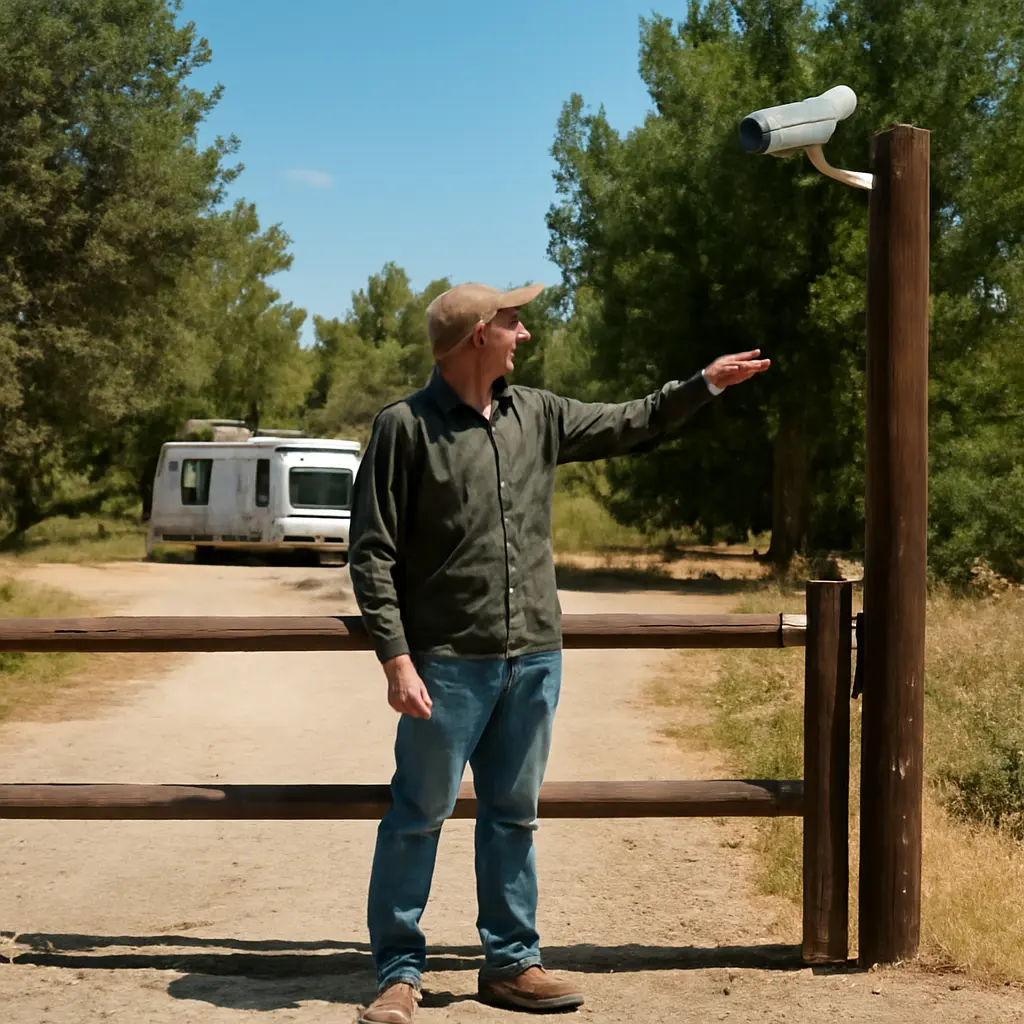
Seasoned RV residents know that park security is not one device or a promise at the entrance: it is a layered system of access controls, lighting, cameras, staff procedures, and neighbor awareness. The National Crime Prevention Council’s long-standing guidance emphasizes that effective security combines environmental design with people and routine practices. For RV travelers and long-term residents, understanding those layers helps distinguish useful safeguards from marketing claims, spot gaps before booking, and respond sensibly to incidents—without assuming that any system can guarantee safety.
Park security systems combine multiple safeguards
A park security system is the coordinated set of physical, electronic, and operational measures a campground or RV resort uses to manage entry, observe shared areas, discourage theft or trespass, and report emergencies. Security practitioners commonly describe this as a layered approach: each safeguard addresses different risks, while no single layer is expected to prevent every incident.
The distinction matters because a keypad gate, a camera sign, or an overnight attendant is only one component. A gate may control vehicle access but cannot establish who is authorized once a vehicle enters; a camera may record activity but does not necessarily provide live monitoring or a rapid response. The relevant questions are how these measures work together, who operates them, and how residents can reach help.
Access control: gates, codes, and visitor procedures
Access control means managing who can enter a property and which areas they can use. Common examples include staffed entrances, vehicle gates, individual access cards, keypad codes, visitor registration, and rules for contractors or deliveries. The U.S. Cybersecurity and Infrastructure Security Agency (CISA) treats access control as a core security practice: permissions should match legitimate need, and credentials should be managed rather than shared indefinitely.
For residents, a gate is most informative when staff explain how guest entry works, how lost credentials are disabled, and whether codes change. A gate that remains open for convenience or relies on a widely shared code may offer less control than its appearance suggests. Ask whether emergency vehicles can enter quickly and what happens if power or the gate mechanism fails.
Cameras and lighting: observation and visibility
Video surveillance records or monitors selected areas, while security lighting improves visibility and can make suspicious activity easier to notice. The National Institute of Standards and Technology (NIST) notes that camera performance depends on such factors as placement, lighting, image quality, and the conditions under which footage is reviewed. A camera pointed at a broad roadway may not capture a useful view of a site number, vehicle plate, or person’s face.
Residents should look for lighting along entrances, pedestrian routes, laundry rooms, dumpsters, and other shared facilities, while also checking that lights do not shine directly into neighboring RVs. Ask whether cameras are actively monitored or simply record footage, how long recordings are retained, and who can access them. The presence of a camera sign alone does not establish that a system is staffed or that footage will be available after an incident.
Staff, patrols, and emergency response
Human response includes on-site management, night staff, security patrols, and established procedures for contacting police, fire, or medical services. The Federal Emergency Management Agency (FEMA) encourages households and organizations to plan communications and identify responsibilities before emergencies occur. In an RV park, a practical plan should identify the after-hours number, the location of the office or emergency information, and how responders find a particular site.
A patrol schedule is not the same as continuous coverage. Ask when staff are present, how incidents are logged, and whether an employee can respond after hours. Residents should still call emergency services directly when there is an immediate threat or medical emergency; park staff are not a substitute for police, fire, or ambulance services.
Residents evaluate security through evidence and routines
Experienced residents assess security by looking for observable practices rather than relying solely on labels such as “gated,” “patrolled,” or “secure.” The National Crime Prevention Council’s Crime Prevention Through Environmental Design approach links safety to the arrangement and maintenance of places, including visibility, territorial cues, and responsible use of shared spaces. In an RV setting, those principles translate into clear sightlines, maintained lighting, controlled access, and staff who know how to handle concerns.
There is no single national statistic that reliably compares the safety of all RV parks: parks differ in size, location, reporting practices, occupancy, and the services they provide. General crime statistics cannot establish the risk at a specific campground. A site visit, direct questions, and a review of recent local information are therefore more useful than assuming that one security feature guarantees a particular outcome.
Questions to ask before booking or extending a stay
A security inquiry is a short check of policies and real-world operation. Ask management:
- Is the entrance staffed or access-controlled, and how are guests and deliveries admitted?
- Are cameras monitored live, or do they only record? Who may request footage after an incident?
- What areas are covered by lighting, and are there regular checks of shared facilities?
- Who is on duty overnight, and what is the procedure for contacting that person?
- How are incidents documented, and are residents notified about relevant safety concerns?
- Where are emergency contacts and evacuation instructions posted?
Clear, consistent answers are more useful than broad assurances. Residents can also inspect the entrance and common areas at different times of day, read recent reviews for repeated and specific concerns, and check local law-enforcement information where available. A single online complaint is not proof of a pattern, but recurring reports about the same unresolved issue merit follow-up.
Personal habits complement park safeguards
Resident precautions are everyday actions that reduce avoidable exposure and make reporting easier. They include locking storage compartments, securing bicycles and outdoor equipment, keeping keys and access credentials private, and avoiding public posts that reveal a unit’s absence or valuables. Residents can also learn nearby neighbors’ names and agree on a simple way to share concerns, while avoiding confrontations with suspected offenders.
Keep an inventory of valuable property, including serial numbers and photographs, and store copies securely. If theft, damage, or suspicious activity occurs, prioritize personal safety, contact emergency services when appropriate, notify management, and record times and details while they are fresh. Do not touch potential evidence or publish unverified accusations; provide factual information to the appropriate authorities.
Privacy and reliability are part of security
A system can improve observation while also collecting sensitive information. The Federal Trade Commission advises consumers to understand what connected devices collect, how data is stored, and who can access it. These questions apply to park cameras and also to residents’ personal doorbell cameras, wireless sensors, and other connected equipment.
Camera policies and resident privacy
A responsible camera policy identifies the system’s purpose, coverage, authorized users, retention practices, and process for handling footage requests. Cameras should be directed toward legitimate shared or entry areas rather than into private RV interiors or neighboring living spaces. Residents considering their own cameras should review park rules and local privacy laws, position devices narrowly, and avoid recording conversations or private areas without authorization.
Power, connectivity, and backup plans
Electronic safeguards depend on electricity, communications, maintenance, and trained operators. A network outage may interrupt remote monitoring; a failed gate may affect both access and emergency entry. Ask management what backup procedures apply during power loss or system failure, and keep essential emergency contacts available offline rather than relying exclusively on a park app or internet connection.
An illustrative scenario shows why layers matter: if a vehicle enters behind another vehicle while a gate is open, access control may not identify the second driver. Good lighting can help residents observe the area, cameras may preserve a record, and an after-hours contact can direct an appropriate response. The example is not evidence that a particular park has experienced such an event; it demonstrates how complementary measures address different gaps.
Conclusion: informed residents strengthen park security
RV park security systems work best as layers: access control regulates entry, cameras and lighting support visibility, and staff procedures provide a route to response. Seasoned residents judge those layers by their operation, maintenance, privacy practices, and backup plans—not by a gate or security sign alone. Before booking or settling in, ask specific questions, learn the emergency procedure, and use sensible personal precautions. These steps help residents make informed choices and contribute to a safer, more considerate community.
Sources: National Crime Prevention Council, Crime Prevention Through Environmental Design (CPTED), https://www.ncpc.org/resources/home-neighborhood-safety/crime-prevention-through-environmental-design-training-program/; Cybersecurity and Infrastructure Security Agency, Access Control, https://www.cisa.gov/topics/physical-security/access-control; National Institute of Standards and Technology, Guide to Protecting the Confidentiality of Personally Identifiable Information, https://csrc.nist.gov/pubs/sp/800/122/final; Federal Emergency Management Agency, Ready.gov, Make a Plan, https://www.ready.gov/plan; Federal Trade Commission, Protecting Your Privacy and Security Online, https://consumer.ftc.gov/articles/how-secure-your-home-wi-fi-network
Related Posts

Practical Comfort Features That Separate Average Indoor RV Facilities From the Best
Practical Comfort Features and Indoor RV Facilities Indoor RV facilities serve as vital components in [...]
Monthly RV parking with full hookups versus dry camping, which wins
Monthly RV parking with full hookups is a paid site that typically provides electrical power, [...]
Setting Up a Year-Round RV Base Camp That Actually Works
A year-round RV base camp is a stationary, weather-ready home site designed to support an [...]